Doja Cat, You Wrong for That...
Doja Cat Is Not a Trademark: What It Really Takes to Protect a Name | I Am What an Intellectual Property Attorney Looks Like.

Hey Fam,
🎶 It’s a beautiful day in the neighborhood. 🎶
And it’s another wonderful day to talk all things trademarks, copyright, and tea.

When you see names like Jay-Z, Beyoncé, Rihanna, or Kendrick Lamar, you might assume that their celebrity status alone is enough to secure them trademark protection.
After all, they have become household names, wield a ton of leverage, and influence everything from fashion trends to political conversations.
Their brands generate billions, spark movements, and define eras.
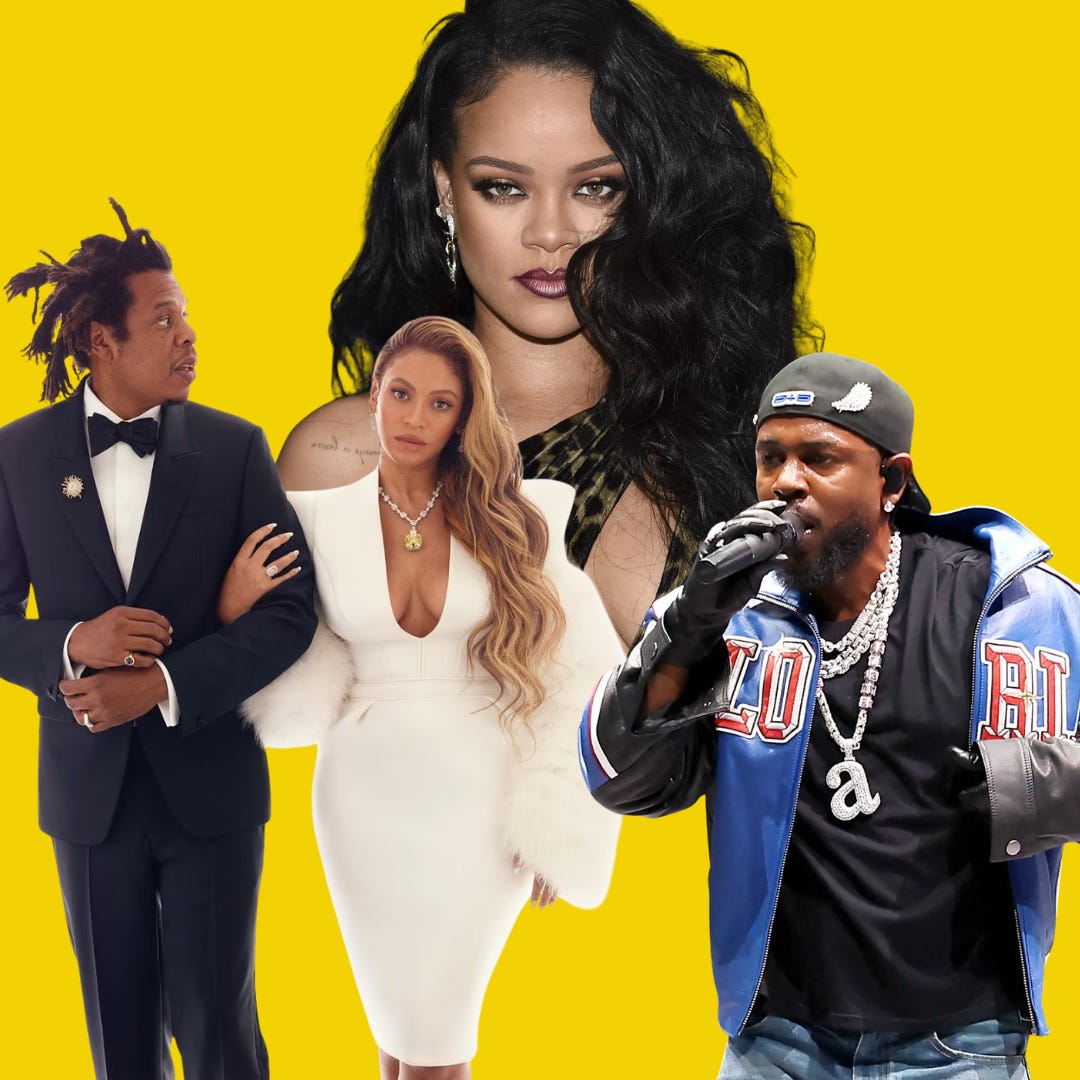
So yeah, it’s easy to assume that their names — just by virtue of fame — are automatically protected by law.
They’re not.
In the world of intellectual property, influence isn’t enough.
Visibility isn’t protection.
And popularity doesn’t equal ownership.
Doja Cat found that out the hard way…
In March 2019, Amala Ratna Zandile Dlamini, also known as Doja Cat, received a trademark refusal that went to the very core of her ability to monetize, leverage, and even own her stage name.
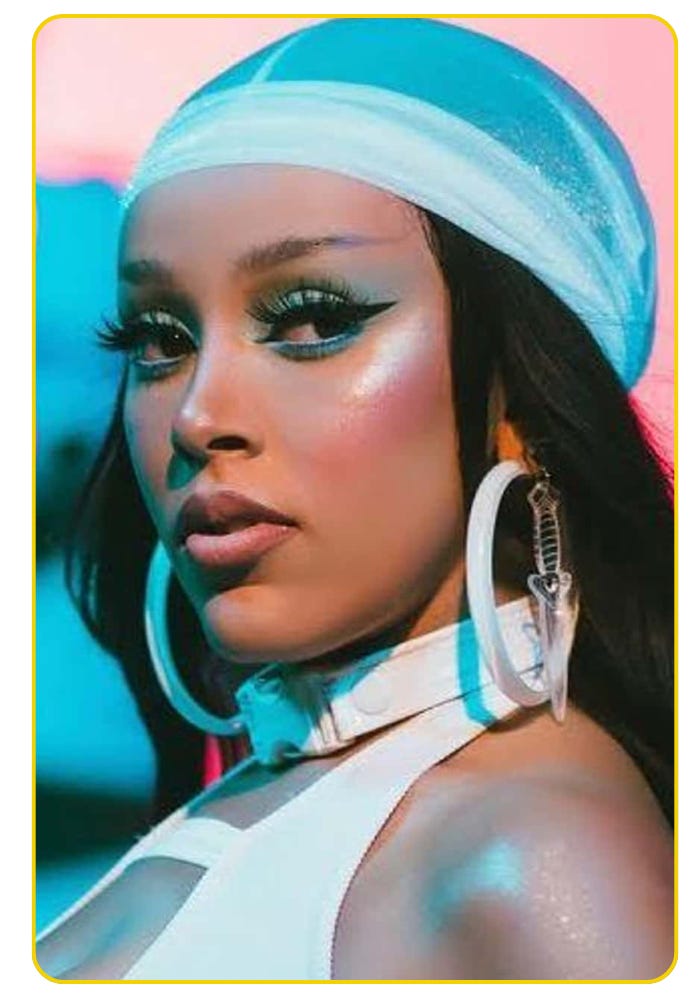
Essentially, the USPTO refused her application for “Doja Cat” under Sections 1, 2, and 45 of the United States Trademark Act, stating that her name didn’t function as a trademark for sound recordings.
Translation?
The government basically said: “Cool stage name, boo… but we don’t see it being used like a brand.”
So Doja Cat’s team had to go back to the drawing board.
Upon returning to the USPTO, they showed things like multiple albums, singles using the name, public recognition that tied the name to a series, and that she actually controlled the quality of the recordings bearing her name.
This was the key that unlocked the USPTO door for Doja.
Her legal team ultimately secured the registration.
But, to be honest, this was a totally avoidable fumble.
And at Firm for the Culture, it’s one we see all the time….
But:
Well, maybe I’ll mind Doja’s business a little…for the culture. :)
The lesson?
Stardom isn’t strategy.
And even viral fame doesn’t exempt you from having to show legal receipts.
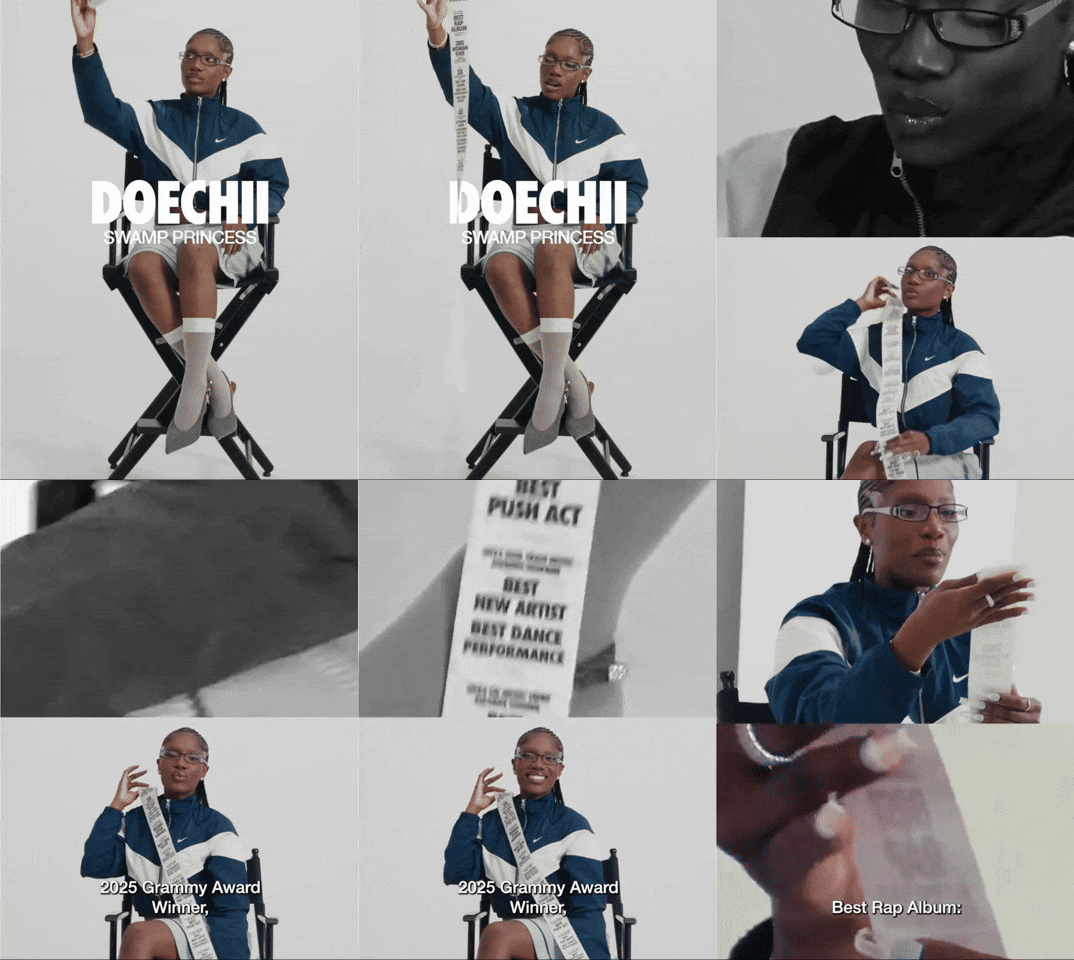
So what lessons do we take from this?
In this Founder’s Letter, we’re breaking down what every creative and founder should know before trademarking their name
…whether it’s a pseudonym, stage name, given name, pen name, alter ego, or even a cultural moniker…
…and the legal, strategic, and cultural moves that turn a name into lasting ownership.
Ready?
Let’s get into it.
Loving This Post?
Show us some love by adding a “❤️,” giving a share, or commenting below; this will make our hearts sing.

But First, Church Announcements:
We’re Hosting the LAST Workshop the “Leverage Your Brilliance” Series!
Whew….
I’m not gonna lie to you, fam.
This workshop series has wildly exceeded my expectations — and honestly, it reminded me why we started Firm for the Culture in the first place.
With every session, we’ve grown.
Grown in the number of attendees who stayed on live ‘til the very end.
Grown in the depth of questions asked.
And grown in the clarity and confidence that founders like you — creatives like you — are bringing to the table.
It’s been dynamic.
Energizing.
And most of all, impactful.
It’s so affirming to know that, from our workshops, you, Founder Fam Members, are moving more intentionally to protect, leverage, and monetize your cultural brilliance.
Because your cultural brilliance matters.
So…to everyone who’s attended a workshop, shared a post, asked questions about during the presentation, left a comment, or simply showed up — even when you didn’t have all the language yet for what brand protection looks like:
Thank you.
We’re closing the series with one last workshop.
And you already know — it’s gonna be good.
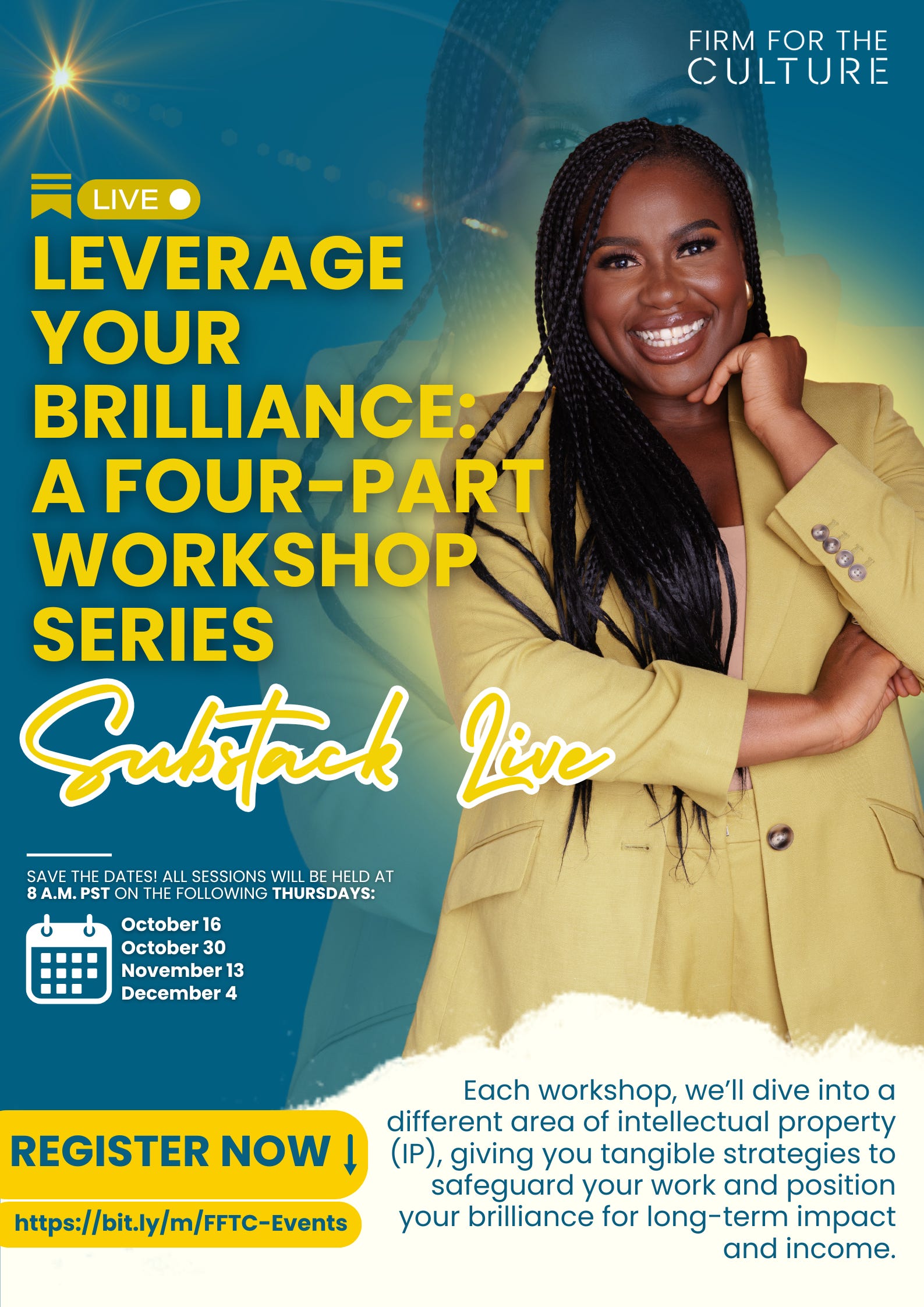
Workshop Lineup:
What to Do Before You Brand: October 16, 2025The pre-legal foundation that helps you build a brand worth protecting.
Copyrights for the Culture: October 30, 2025From music to course materials, learn how to protect the creative works you’ve poured your soul into.Introduction to IP Licensing: November 13, 2025A breakdown of how licensing works, what to watch for, and how to get paid while keeping ownership.
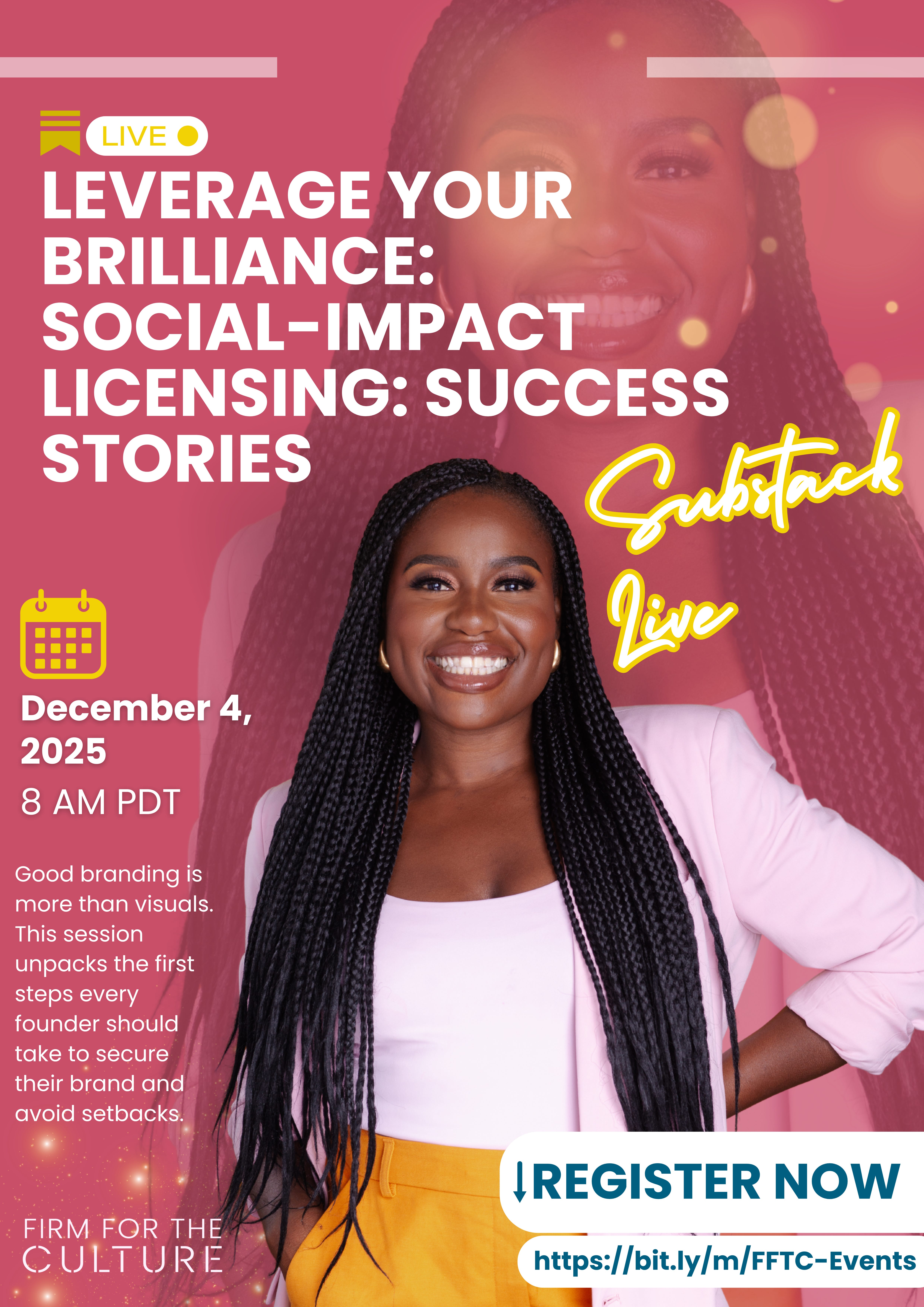
Workshop Notes will be Available Until THIS FRIDAY - DOWNLOAD HERESocial Impact Licensing: Success Stories: December 4, 2025 at 8:00 a.m. PST
Real-life case studies of brands who’ve turned impact into income without compromising their mission.
Register Here: SOCIAL IMPACT LICENSING
Sign Up for Our Fourth Workshop Here:
Let’s close the year strong — with strategy, clarity, and protection for the intellectual property that’s been building your legacy all along.
And One More Thing for Your Calendar…
We’re gathering again on November 20th at 12:00 p.m. for the next FourthWave Forum, and you won’t want to miss this one.
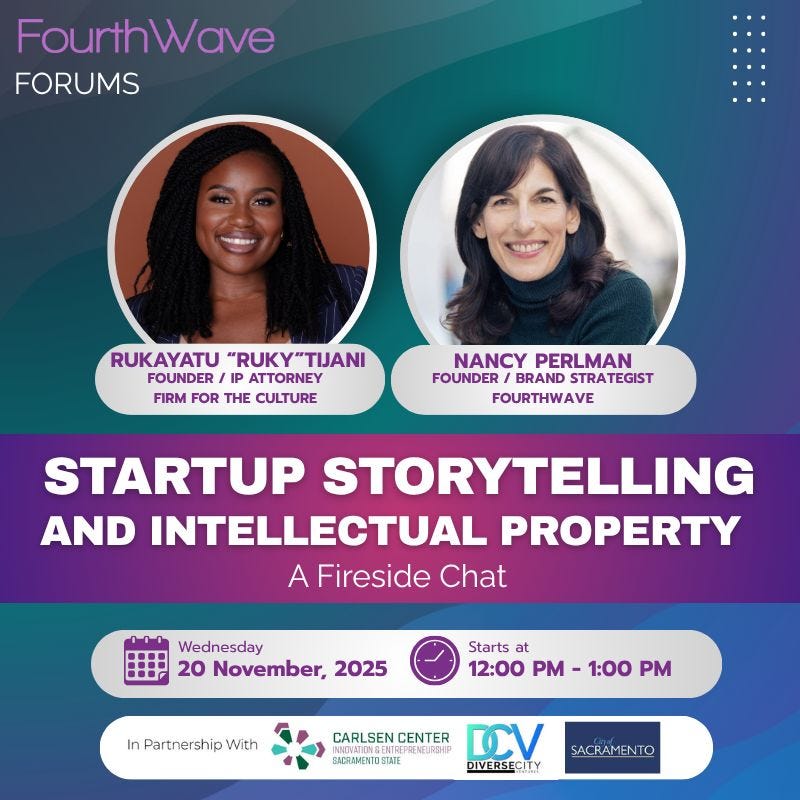
This session dives into one of the most powerful tools a founder has: a story that actually strengthens the brand.
I’ll be sharing practical, founder-friendly ways to connect narrative to strategy, communicate with confidence, and make smart IP decisions that support growth — not guesswork.
Nancy Perlman will guide the conversation, and we’ll close with a live Q&A so you can walk away with steps you can implement right now.
Register here: STARTUP STORYTELLING | 12:00 PM PST on Nov 20, 2025
Now, back to our regularly scheduled program…. :)
So what lessons can we take from Doja’s trademark debacle?
Let’s dive right into it.
This one gets missed far too often.
If you’re trademarking a name that refers to a living person—even if it’s your own—you must explicitly give consent.
That’s not optional.
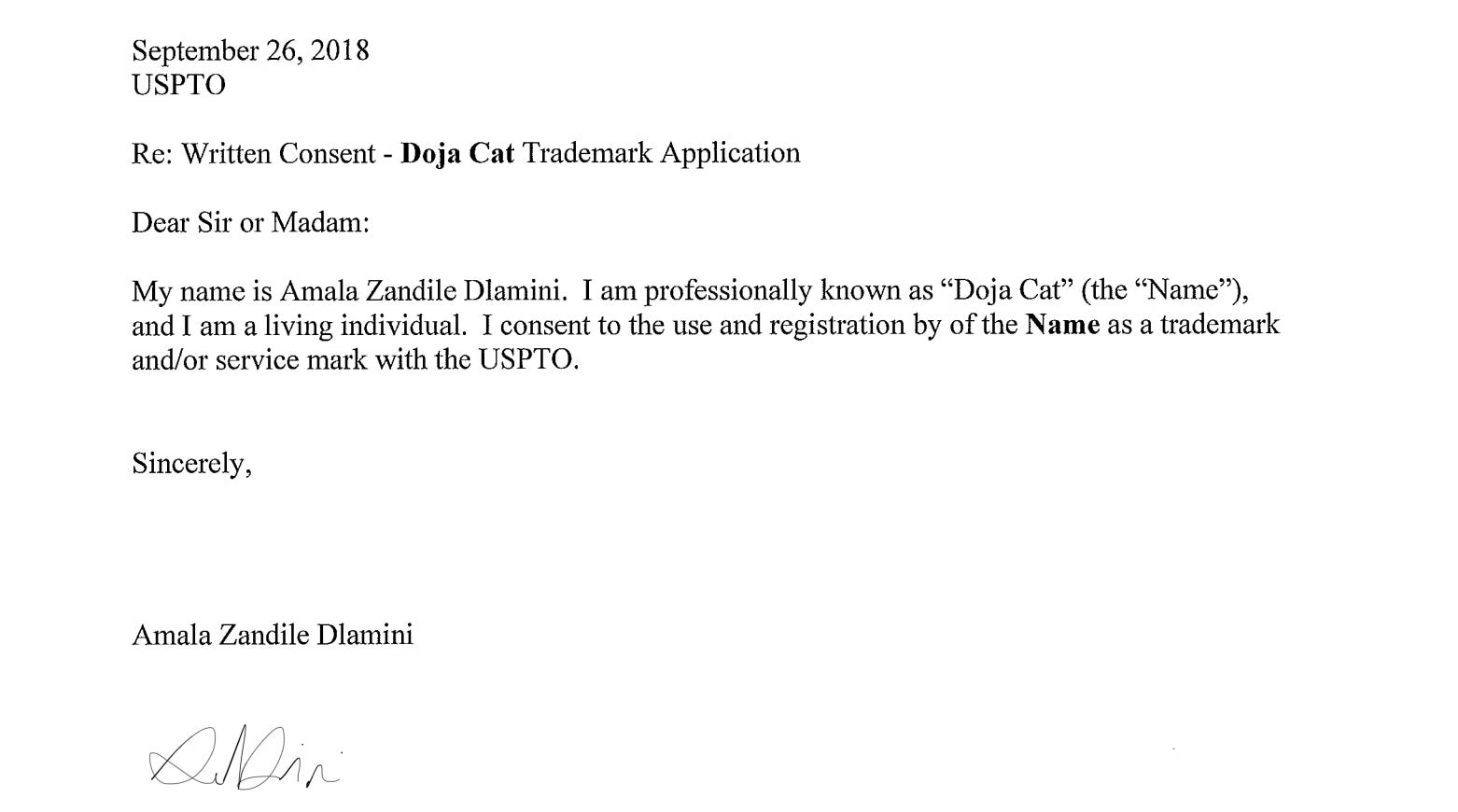
When Doja Cat filed her trademark application for the name DOJA CAT, she also had to file a written statement under her legal name, Amala Zandile Dlamini, confirming that:
She was a living individual,
She was the performer behind the name,
And she consented to the registration of that name as a federal trademark.
Because the right to use the name as a trademark attaches to the living individual, this statement cannot be delegated or passed along to an assistant:
Without this, the application would’ve been dead on arrival.
The reason?
It ensures that no one else—whether it’s a label, a fan, or a third-party opportunist—is trying to secure rights to your identity without your authorization.

This is a big one.
A name, by itself, doesn’t function as a trademark unless it’s attached to actual goods or services.
In Doja’s initial refusal, the USPTO flagged that, based on the application, her name was being used merely as a performing artist’s name — not as a source identifier for a series of sound recordings.
But…what’s the difference?
Well, for one, a performing artist’s name attaches to the individual, not a service or good.
Trademark law applies to services and goods only, and after the 13th Amendment of the United States Constitution (which hopefully will still be in place by the time you get this Founder’s Letter), slavery is abolished so … you can’t sell people, but you can sell services or goods.
That’s the key distinction in trademark law.
For names to function as trademarks for music, the artist must show that the name appears on multiple releases (i.e. goods) and that it’s recognized by the public as a brand associated with goods or services like performing arts, merch, concerts, or downloadable sound recordings — not just as a name on a playlist.
Trademark rights aren’t just about ownership.
They’re about control.
To get and keep a trademark, you must prove that you’re not just using the name—you’re controlling how the name is used across products and services.
In Doja Cat’s case, that means she had to show:
She was actively performing or creating the sound recordings
She controlled the quality of the recordings
She controlled how the name Doja Cat was used in connection with the brand’s merchandise and music
Without this, even her household name could lose trademark protection.
The Risk of Personal Ownership
Here’s an extra tip for you…
Interestingly, Doja Cat filed this application in her personal capacity—not through an LLC or corporation.
While that gave her tighter control, it also exposed her to personal liability.
What does that mean?
If a dispute arises—say, over a contract, an infringement claim, or a licensing issue—she’s legally on the hook as an individual.
This is why many artists eventually transfer their name-based trademarks into a business entity.
It’s about protection, flexibility, and long-term brand sustainability.
The Bigger Picture: Celebrity ≠ Trademark
It’s not enough to be famous.
It’s not enough to have followers.
It’s not enough to go viral.
Trademark protection requires structure.
It requires strategy.
It requires proof.
So let’s make sure you know what’s required the next time you file.

If you’re building a brand around a stage name, a personal name, or even a nickname, you need to:
Show commercial use
Attach the name to actual goods or services
Exercise control over the brand’s use
And, if applicable, submit a consent statement
You’re not just building a brand.
You’re building a business.
And most of all, you’re building a legacy.

Share your thoughts in the comments!

From Bedroom Beats to Brand Power: How Doja Cat Turned Creativity into Ownership
Why Kendrick Lamar Trademarked His Own Name (and What That Means for Creatives)
Yes, You Can Trademark Purpose: Brands That Turned Impact Into IP
Want help figuring out whether your name—or brand—is ready for trademark protection?
We’ve got you.
Book a Strategy Session with Firm for the Culture and let’s make sure your name isn’t just recognized—it’s protected.
Need Help Protecting Your Creativity?
If you are unsure—or if you know you need to take action—reach out to us.
We have helped countless founders and creatives safeguard their intellectual property, and we would love to do the same for you.
If you need further guidance, reach out to me and my team at Firm for the Culture.
We’re here to help you navigate the copyright, trademark, and thought leadership journey.
Can’t wait to help you protect your dynamic impact.
And #ThatsAWrap
The Doors of the Church Firm Are Open
Thanks for reading
See you next time.
You always break it down while keeping the facts on point — thanks to you, BEE - Beyond Equity in Education is protected and not burdened because we’re a trademark….you made this happen and we cannot thank you enough….companies out there who are doing “the work,” be sure to connect with the Firm for the Culture — they help allow you to do the work and get the credit for the work you are due🫶🏾✊🏾
Yes. It has always been my understanding that you can't copyright a name. For major media figures, it might be threatening. But for authors, it means we don't have to worry that our book or story bears one of the zillion titles already in use. A few years after I wrote a novel, someone else wrote a book of the same name about an entirely different subject. There was no harm, and it might not have happened had I not chosen such a thoroughly boring title.
For many of us, the lack of legal protection for titles just means we're not always looking over our shoulders to avoid duplicating a phrase or name that naturally gets repeated constantly throughout a culture. But I must admit I never thought of naming any of my work Doja Cat. Further good luck to her.