From Showgirl to CEO
What Taylor Swift’s “Showgirl” Era Reveals About Building, Protecting, And Scaling A Brand That Lasts. | I Am What an Intellectual Property Attorney Looks Like.


Hey Fam,
I’m not gonna lie.
Taylor Swift is a business BAWSE…
Might turn me into a Swiftie….
Keyword: MIGHT.
Here’s why:
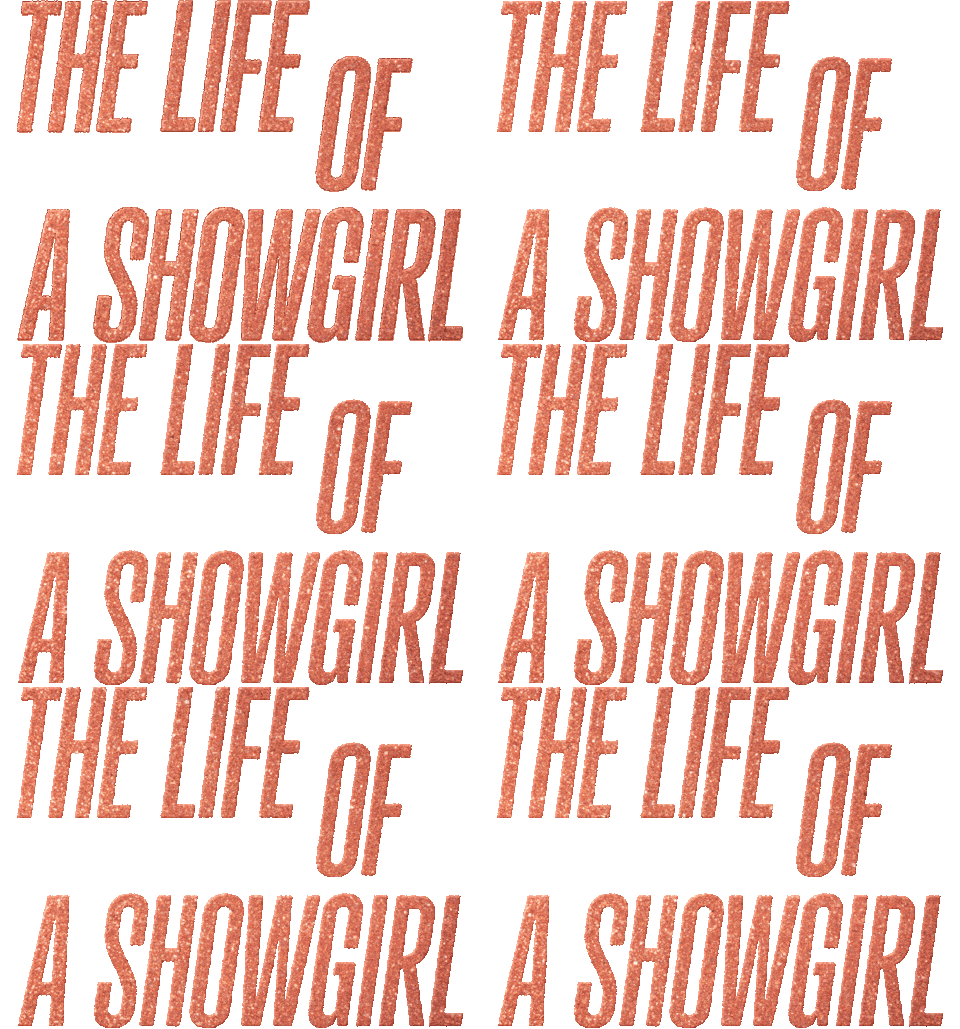
On August 11, 2025, Taylor Swift filed a trademark for the phrase “The Life of a Showgirl.”
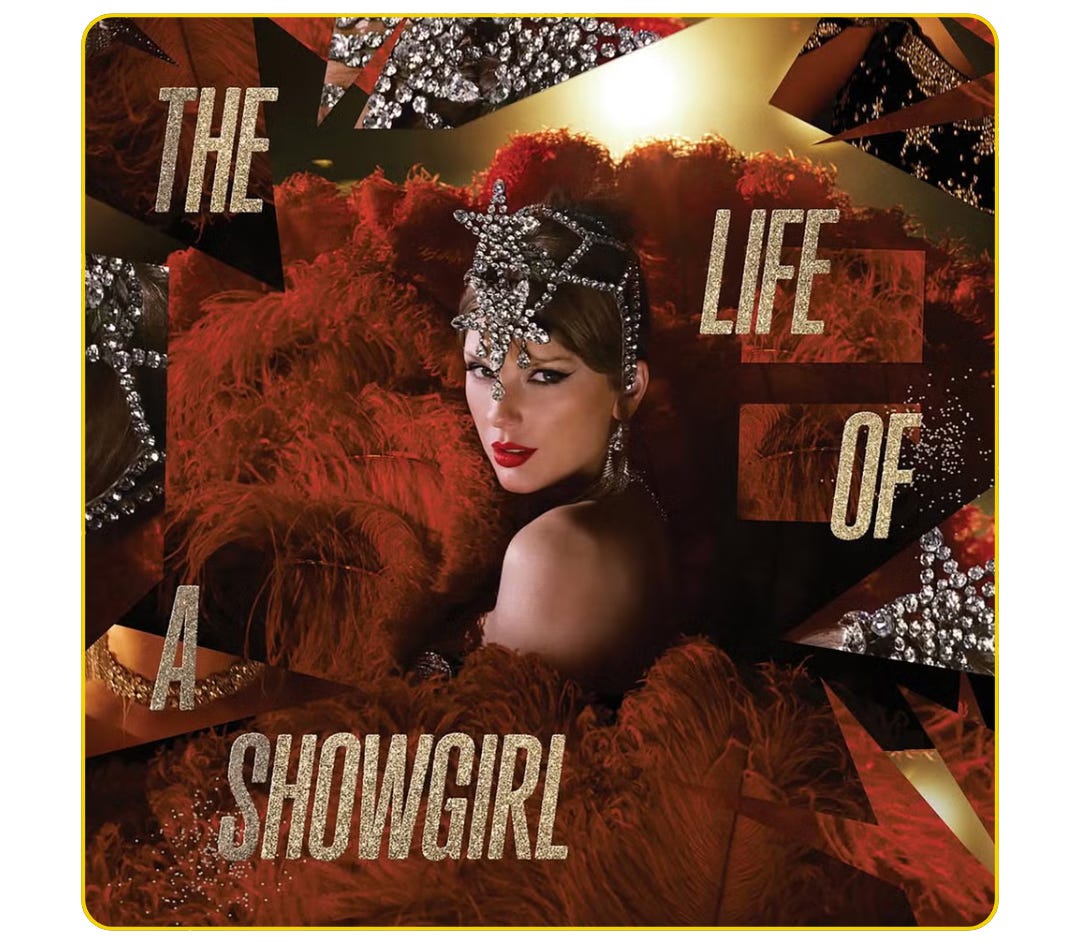
The timing wasn’t a coincidence — that same day she announced her 12th studio album under that title.
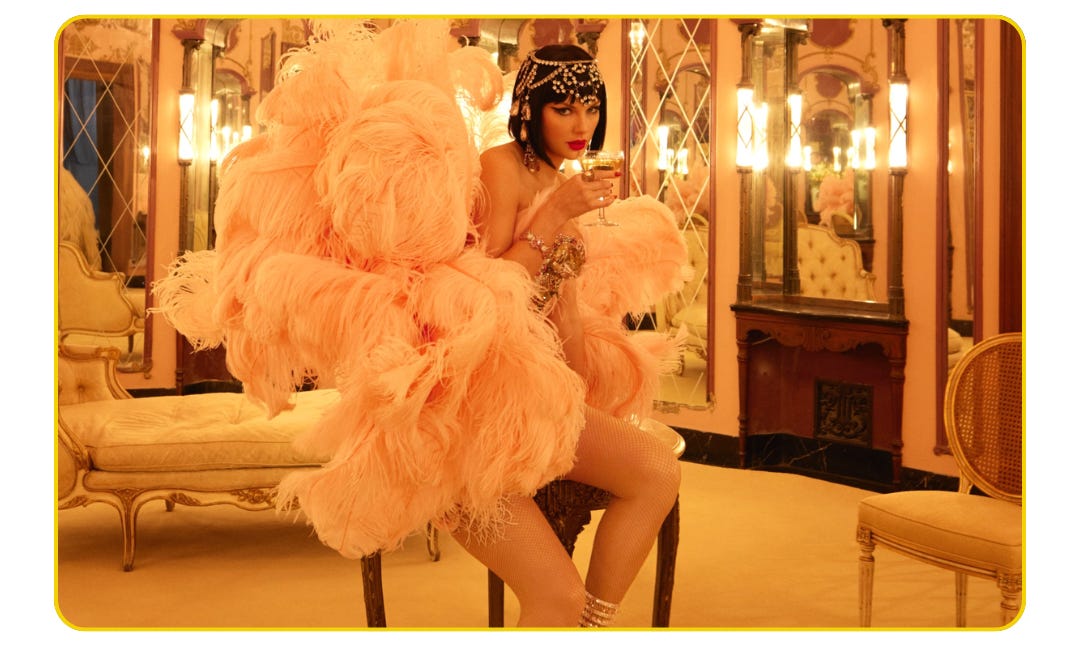
Moments after the announcement, her website went live with over 50 items of merch tied to the phrase, including:
T-shirts, sweatshirts, hoodies
Journals, necklaces, and jewelry
Guitar picks, towels, and even golf club ornaments
And within minutes, fans — and the internet — lost their minds.
And her products sold out.
Sounds like a successful campaign by most standards, right?
But what many people don’t see is the legal strategy that unfolded long before that album name hit the public.
So let’s break it down.
In this Founder’s Letter, we’ll break down three key moves behind Taylor Swift’s trademark strategy — timing, clearance searches, and brand control — and what they mean for you.
Ready?
Let’s dive right in.
Loving This Post?
Show us some love by adding a “❤️” or commenting below; this will make our hearts sing.
But First, Church Announcements:
New Freebie Alert: When’s the Right Time to Trademark?
If you’re a social entrepreneur building something meaningful, timing is everything.
Waiting too long to protect your brand could cost you opportunities—or even the rights to your own name.
📘 Download our free workshop: When’s the Right Time to Trademark?
This must-read resource is designed for thought leaders, coaches, and consultants who want to know the exact moment to secure their brand.
Inside, you’ll learn:
→ Why “later” can be too late when it comes to trademarking
→ The signs your business is ready to file (from your first client to your first product launch)
→ The risks of delaying protection—and how competitors could beat you to your own name
→ How to safeguard your business name, logo, program titles, podcast, and signature offers at the right stage
Whether you’re just starting out or scaling your impact, this guide shows you the roadmap to protecting your work before it’s at risk.
Your work deserves more than recognition. It deserves legal protection.
Now, back to our regularly scheduled program…. :)
The Question Everyone is Asking … Can Taylor Own “The Life of a Showgirl”?
Yes — and no.
But mostly yes.
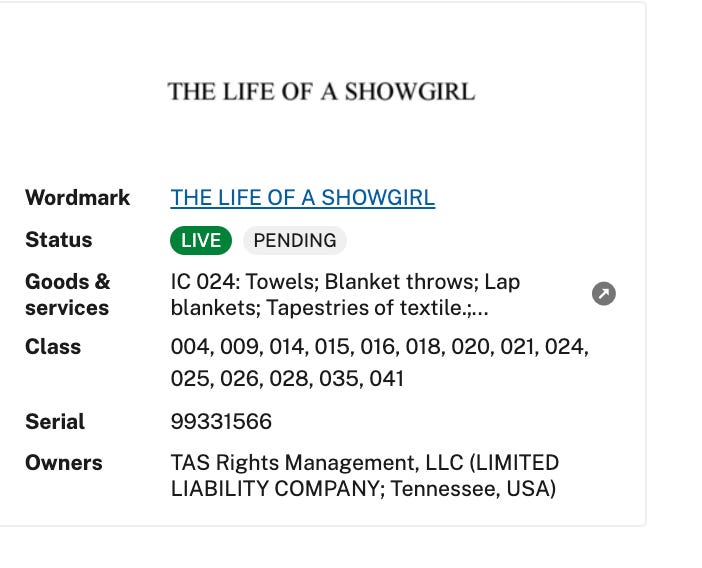
Taylor Swift (through her holding company TAS Rights Management) filed to protect 14 different trademark classes, covering everything from:
Live entertainment and streaming services
Jewelry, posters, and clothing
Cell phone cases, stationery, toys, and more
This wasn’t a casual grab.
Let’s break down three key strategies she implemented:

What Taylor Did
She filed “The Life of a Showgirl” trademark applications right around the same day she announced the album.
This kept the narrative tightly controlled. It prevented leaks, speculation, or someone else trying to beat her to the name.
By doing this, she avoided “anticipation” in media or IP circles that the name was coming — she didn’t give others warning to register similar marks first.

Why It Matters
Trademark filings are public records.
You can see them.
Your momma can see them.
And TMZ can see them as well…
Once the application is submitted, people can see it—if they’re looking.
If you file too early, you risk someone using your name (or a version of it) to get press or domain names or social handles or even to file oppositions.
And if you wait too long, your name might be used by someone else first, or you might miss pre‑orders, merch windows, early buzz.
You lose the chance to own the narrative.
What You Should Do
Plan your launches so that the IP (trademark) filing aligns tightly with your reveal. Not so far ahead that it leaks, but not so late that others grab your momentum.
Use your legal counsel to time filing so that your reveal date, merch launch, album/podcast/episode/paper launch all sync together.
If you want to keep things under wraps, consider filing under a holding company or a shell entity, so the public filings don’t immediately give away the identity or the brand idea.
This gives flexibility and surprise.
What Taylor Likely Did
Before filing, her team would have done broad clearance searches: checking existing trademarks in the U.S. and likely other markets for anything like “Showgirl,” “Showgirl Tour,” “Life of Showgirl,” “TLOAS,” etc. To make sure there were no confusingly similar marks.
They likely looked across many trademark classes (not just entertainment/music) for merchandise, apparel, writing journals, toys, etc. That way, when she files under dozens of classes, there are fewer surprises.
Probably also checked domain names, hashtags, design elements, stylizations — anything someone might try to use to ride her wave without permission.

Why It Matters
Without a proper search, you could pick a name thinking it’s free, only to find out someone else has a similar mark in your product line (e.g. clothing, merch, accessories). That leads to costly legal fights, rebrands, lost merchandise, or having to abandon part of your brand.
When you expand (merch, specialty goods, limited edition items), you want the freedom to produce under your brand name without unexpected legal barriers.
A strong search lets you foresee objections, oppositions, conflicts — and budget for them or adjust branding/materials accordingly.
What You Should Do
Before you commit to a brand name, product line, or merch concept, run a comprehensive clearance search: in your country, and in any countries where you plan to sell/licensing/tour/distribute. Don’t just think of music or content — think apparel, accessories, digital content, toys, etc.
Include stylization: if your logo uses a stylized font, color scheme, or imagery, check whether similar visual trademarks exist.
Use counsel (or tools) that scan both USPTO (or your country’s trademark office) and common law (unregistered marks) plus domain name databases and social handles.


What Taylor Did
She registered multiple classes of goods/services so that merch, physical goods (towels, journals, clothes, guitar picks), as well as entertainment services, performance, etc., are all protected under the trademark.
Likely secured domain names, social media handles, and trademarks in various territories to prevent someone else from building a confusing brand or fake merch.
She also protected the visual identity tied to this era: stage design, imagery, promotional style, logo uses — those are often covered under the “look and feel” of an era‑trademark strategy.
Why It Matters
If someone else uses your name for merch, products, or domain names, it dilutes your brand and can confuse customers. It also creates risk: bogus merch, low quality items, or brand misuse.
Social media / hashtags / SEO are important: once your name is public, anything that people search must lead back to you, not someone else exploiting your name.
Strong oversight of the visual branding (logo, styling, imagery) helps when unauthorized uses happen — gives you a stronger basis to issue takedowns, cease & desist, or enforce your IP.
What You Should Do
As part of your launch, immediately register relevant domains (e.g. brandname.com, showgirlbrand.com, or whatever applies) before public announcement.
Park them if needed.
Secure social media handles or variations. Consider trademarking the abbreviations/acronyms as well (like “TLOAS”) so you get protection for tags and merch variations.
Protect not just the name, but the look: colors, fonts, imagery. Think ahead: what will your merch or promotional visuals look like? How will someone misuse them? Plan protections.
Why This Matters for You
If you’re building out your brand — especially if there’s a creative or content component (albums, books, merch, experiences, etc.) — Swift’s strategy offers a blueprint. Here’s what to internalize:
Protect before you launch. Don’t wait until after your merch is sold, your logo is everywhere, or your reveal video drops. Once public, changing things gets exponentially harder and more expensive.
Think in classes, not just offerings. Your product line will probably grow. It’s smarter to apply for trademark coverage across all classes you expect to use now and near future.
Control your narrative. When people see your name, your merchandise, your visuals, you want them to associate them only with you, not a knock‑off, preemptive seller, or someone riding your audience.
Have legal counsel as part of your marketing/launch team. IP isn’t just an add‑on; it’s part of your launch strategy, your content calendar, your merch plan.

Taylor Swift’s Life of a Showgirl trademark wasn’t just about an album drop — it was a masterclass in timing, preparation, and control.
She showed us that protecting your brand isn’t an afterthought. It’s part of the launch itself.
For founders and creators, the lesson is clear: don’t wait until your brand is public to start thinking about protection.
File early, search widely, and secure the digital spaces where your name will live.
Whether you’re dropping an album, launching a product, or opening a new business, the same rules apply.

The truth is, you don’t need Taylor’s team or resources to take the first step.
You just need the awareness that your brand — your name, your ideas, your story — is worth defending before the spotlight finds you.

Hit reply or drop a comment. Let’s talk about it.
Need Help Protecting Your Creativity?
If you are unsure—or if you know you need to take action—reach out to us.
We have helped countless founders and creatives safeguard their intellectual property, and we would love to do the same for you.
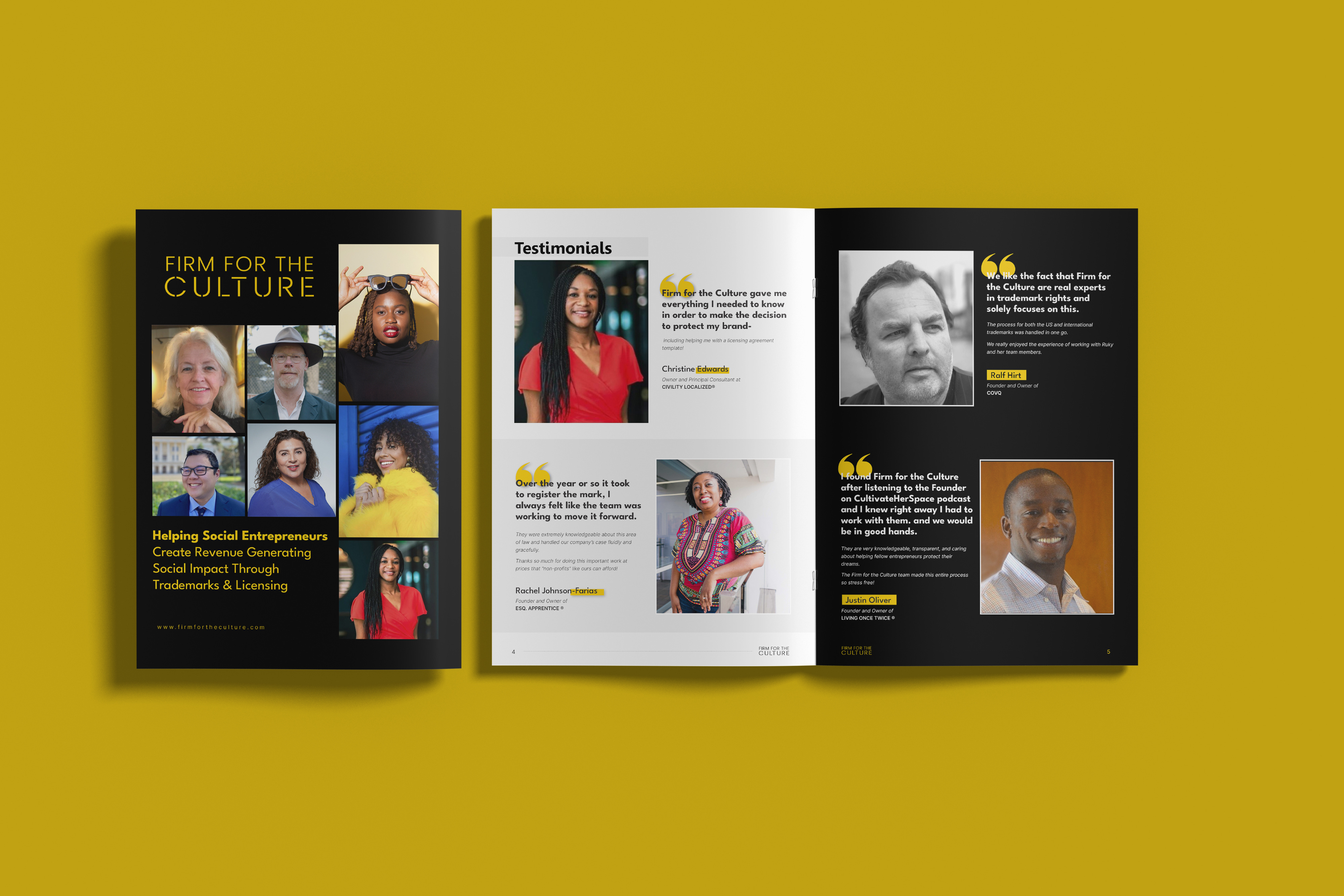
If you need further guidance, reach out to me and my team at Firm for the Culture.
We’re here to help you navigate the copyright, trademark, and thought leadership journey.
Can’t wait to help you protect your dynamic impact.
And #ThatsAWrap
The Doors of the Church Firm Are Open
Thanks for reading
See you next time.